
Module 11:
The Board of Nursing Investigation
Equip yourself with the legal and ethical frameworks necessary to transition from silent witness to protected advocate when institutional policies threaten public safety.
Learning Objectives
Define the ethical and legal criteria for whistleblowing under the 2025 Code of Ethics and HIPAA federal exceptions.
Analyze the "Weaponized Language" policy briefs and their impact on professional dissent and Board of Nursing investigations.
Execute a "Top 5" documentation strategy to create a factual, secure, and chronological record of ethical violations.
Interpret 45 C.F.R. § 164.512(j) to identify when disclosing Protected Health Information (PHI) is a justified act of public protection rather than a privacy breach.
Evaluate the outcome of real-world Board of Nursing complaints to distinguish between policy violations and ethical adherence.
Develop a personal "Ethical Resilience" plan to navigate the social, financial, and professional risks of high-stakes advocacy.
Workbook & Practical Application
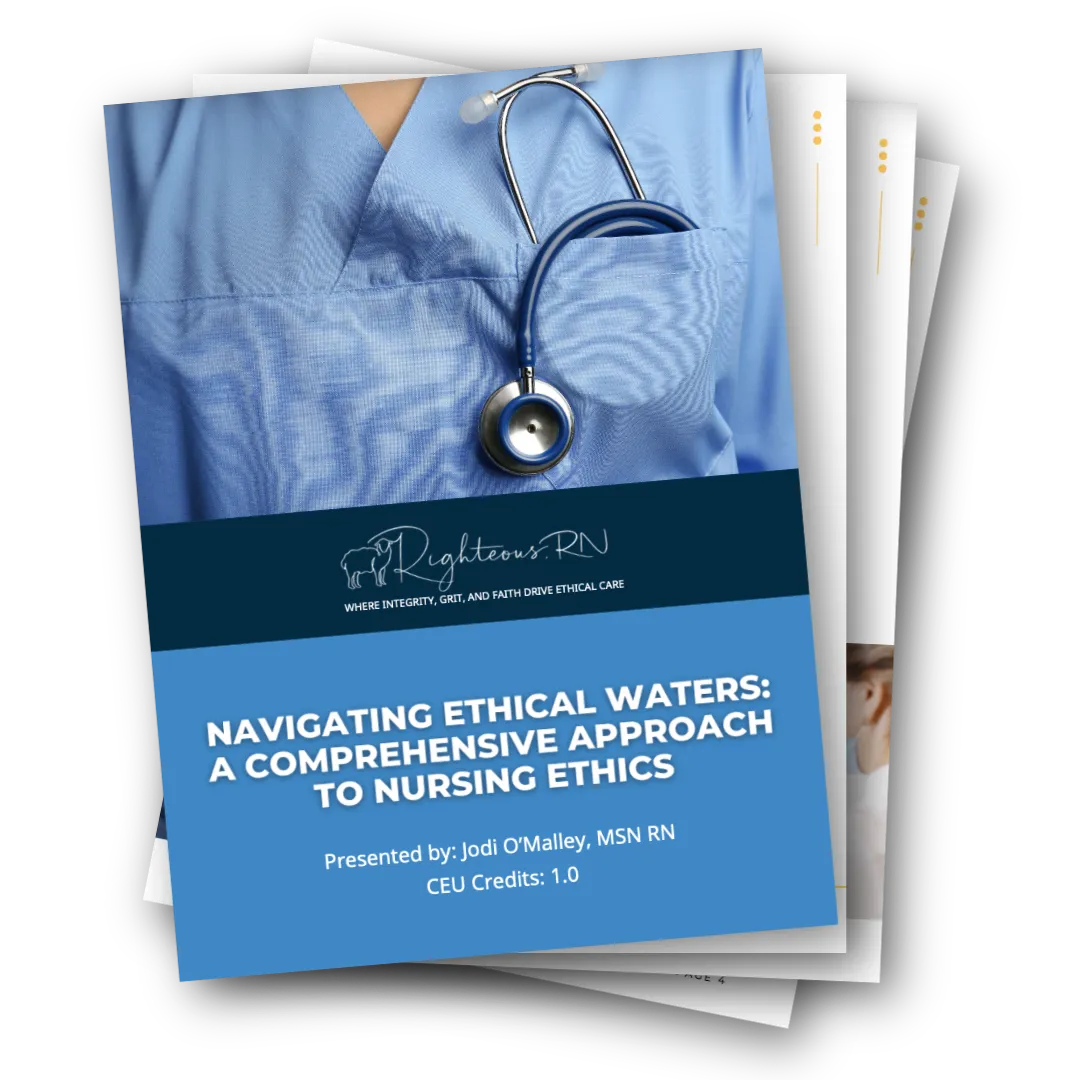
This module includes a guided workbook to help you:
Reflect on ethical challenges in your own workplace
Analyze real scenarios using ethical principles
Practice decision-making using a structured framework
Strengthen your ability to speak clearly and confidently
Why This Module Matters
Speaking out is a professional obligation, but doing so without a framework can leave you vulnerable to retaliation.
Mastering these protections allows you to:
Navigate complex HIPAA regulations with confidence, knowing exactly when the law protects disclosures made to avert serious threats to health or safety.
Uphold your oath by raising "red flags" on systemic issues—such as vaccine injury suppression or the denial of legal prescribing rights—without fear of ethical wrongdoing.
Identify the difference between "misinformation" and evidence-based dissent to protect your license from weaponized disciplinary actions.
Execute precision documentation that shifts the narrative from emotional workplace conflict to factual, accountability-driven reporting.
Foster a legacy of integrity, using your voice to protect those who cannot speak for themselves and ensuring justice for those being "crushed" by unethical systems.
Want the complete framework?
Enroll in the full Ethics Course to access all 11 modules, case studies, and CEU-supported training.
THIS IS THE NEW ERA OF ETHICAL NURSING.
We are the victims of the system.
We are the voice within it — and the conscience of it.
THIS IS THE NEW ERA OF ETHICAL NURSING.